
a teacher for tomorrow’s
mathematicians
John Berman combines his experience as a research mathematician and leader of the United States IMO team to train the next generation of mathematicians.
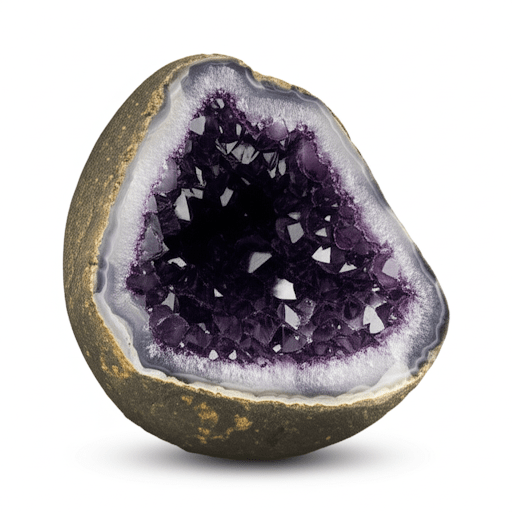
A good math problem is like a geode. To the untrained eye, it is just a rock, but put in the hard work to crack it open, and you might find beautiful hidden structure within.
GeodeMath online courses are small (6-10 students), interactive, and problem-driven. You can only learn math by doing math, so content is reinforced by weekly homework.
GeodeMath is designed for students who want to dive deeper than what is taught in school. Courses teach enrichment, proofs, and problem solving. Students who excel in GeodeMath courses will be well-prepared to take competitions such as AMC, AIME, and USA(J)MO, conduct future research projects, or study math in college. However, GeodeMath is not a math competition prep program or a research program. The focus is on teaching high-quality mathematics.
Registration is open for Spring 2026 courses until December 31. Spring courses will run from late January to April or early May. Information about upcoming classes is here.
Frequently Asked Questions
Q. What course is right for me?
A. GeodeMath courses have a number (1, 2, 3, 4, 5) which indicates the difficulty level of the class. Students who are younger than 10 or have never taken extracurricular math classes typically start at Level 2. Middle school students with more experience may start at Level 3. Level 4 classes are proof based and challenging, and Level 5 is for the most advanced students. Fill out an inquiry form for help in class placement.
Q. What does the letter after the level mean, like Course 3N?
A. GeodeMath courses cycle every four semesters. The letter (N, S, E, W) indicates where we are in the cycle. For example, N classes are offered in Spring 2026. This system is designed so that each class covers a variety of content, and students who are ready to progress from one level to the next can do so seamlessly, without unbalanced knowledge.
Each class will cover roughly equal parts algebra, geometry, number theory, and combinatorics. Each class also includes some instruction in mathematical proofs.
Q. How many students are in a class?
A. Classes are typically 5-10 students. Zoom classes are most effective with a small class size, in which every student has the opportunity to contribute in class.
Q. What is the format of class?
A. Class is a mixture of homework review, problem solving, and discussion, in roughly equal parts. Students are always encouraged to share out loud or using the chat feature. During problem solving portions, students work on problems individually and discuss with the teacher using the chat.
Q. How long is the class?
A. Level 2 and 3 classes meet 60 minutes per week. Level 4 and 5 classes meet 90 minutes per week. Courses are typically 12 weeks, but Level 5 courses are 14 weeks.
Q. What is homework like, or how much time do students spend outside of class?
A. GeodeMath students are mathematical outliers. In any group of outliers, there is lots of variance. Some students may latch onto a problem that interests them and think about it for days. This is the sign of a budding mathematician! However, students are expected to try every problem and spend at least a couple of hours on the homework.
Students should not expect to solve every problem, or even most problems. Ideally, students will try every problem and solve 25-75%. You have to make mistakes in order to learn from your mistakes! In-class homework review is most valuable when there are problems you have tried and failed to solve.
Teachers
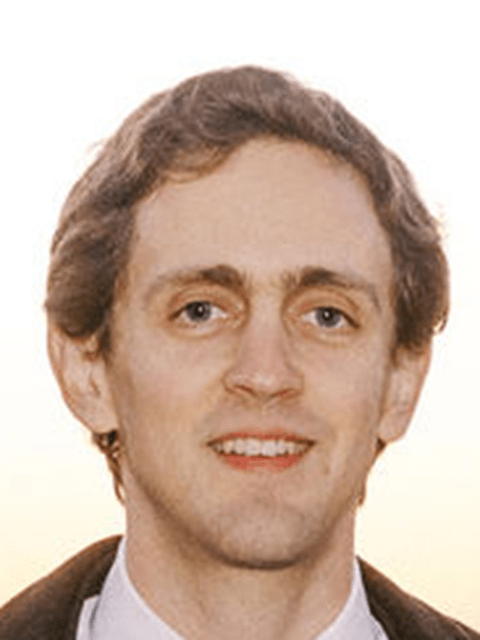
John Berman is the founder of GeodeMath, where he teaches year-round. In the summer, he is also the leader of the United States IMO team (International Math Olympiad), Academic Director of MOP (Math Olympiad Program), and Executive Director of Epsilon Camp.
- Team Leader, United States IMO team (International Math Olympiad)
- Academic Director, MOP (Math Olympiad Program)
- Executive Director, Epsilon Camp
- Mathematician (UT Austin 2018-21, UMass Amherst 2021-22)
- Graduate of MIT (BS 2013) and UVA (PhD 2018)
- IMO gold medalist (2009)
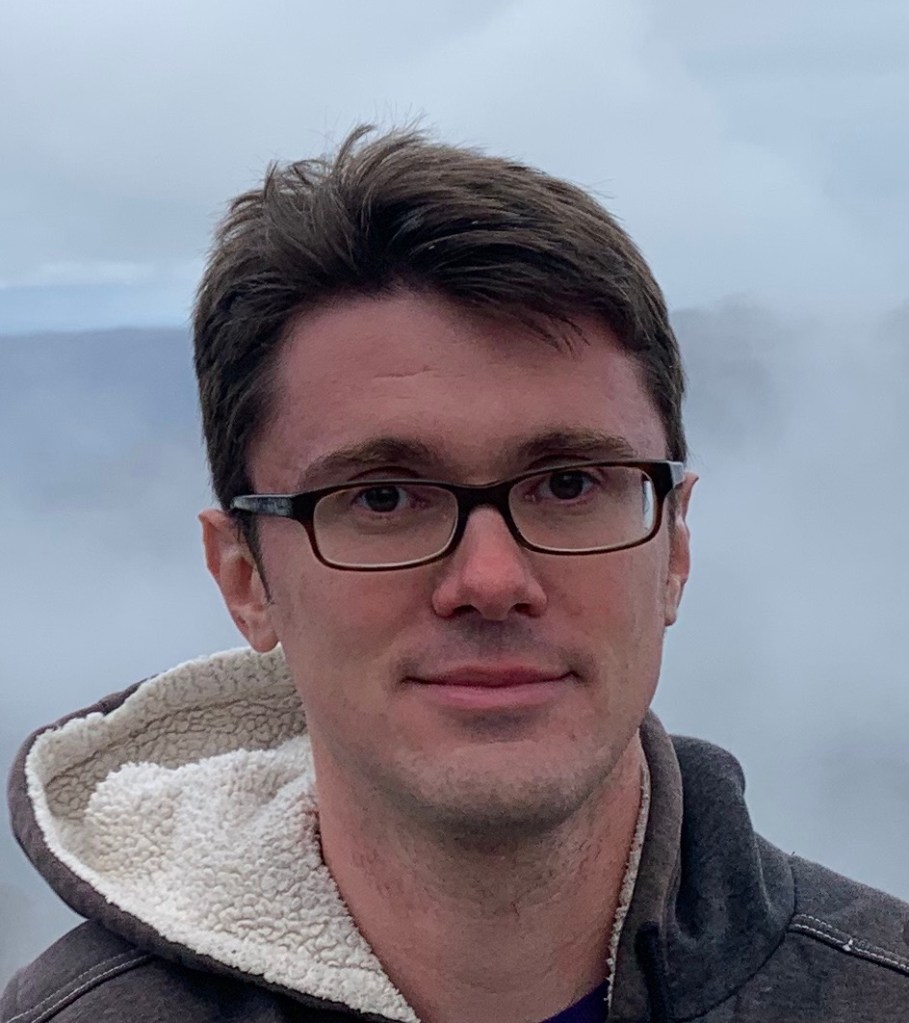
Brian Lawrence is a math professor at the University of Wisconsin–Madison, currently on leave to pursue cutting-edge research in the Bay Area. He is passionate about sharing math, and has years of teaching experience, from MOP to college freshman calculus to advanced graduate number theory. His mathematical interests include algebraic geometry and number theory – algebraic questions about integers, and geometric questions about solutions to polynomial equations. In his spare time, Brian enjoys running, skiing, and tinkering with computers.
- Mathematician (UW Madison 2022-4, UCLA 2021-2, UChicago 2018-21)
- MOP instructor (Math Olympiad Program)
- IMO gold medalist (2005)
- Putnam Fellow (2007, 2008, 2010, 2011)

Diego Eloi is a mathematician with interests in partial differential equations and harmonic analysis. He has taught math at both high school and college level for more than fourteen years, taught both math enrichment and competition mathematics at multiple summer camps, coached math olympiad students, and led the Brazilian team at international competitions including RMM and IMC. Passionate about teaching problem solving, he has also contributed to articles in math education and has written a calculus book. In addition to mathematics, Diego enjoys cooking, traveling, running, playing soccer, and other sports.
- Mathematician (Federal University of Ceara, Kent State, Lone Star College)
- Deputy Leader (Brazil), Romanian Master of Mathematics (2019)
- Team Leader (Brazil), International Mathematics Competition (IMC) 2020, 2024
 GeodeMath